


The short answer
The best dog coats for winter are insulated, cover the chest and belly as well as the back, and fasten without going over the head. Choose a warm lined coat for dry cold, a waterproof shell or full-body suit for slush and rain, and measure your dog’s back length and chest girth before you order.
Not every dog needs a coat. Small, short-haired, lean, very young and senior dogs lose heat fastest, while thick double-coated breeds such as huskies usually stay warm without one. The American Veterinary Medical Association recommends a sweater or coat for dogs with short coats or dogs that seem bothered by the cold. Below you’ll find four warm winter coats for dogs from the DogPack Marketplace, a sizing guide, and how to tell whether your dog needs one at all.
Best dog coats for winter at a glance
| Coat | Best for | Type | Price |
|---|---|---|---|
| Fab Ski Black Leather Shearling Coat | Dry, freezing days | Lined coat | $60.00 |
| Splash Suit – Charcoal | Slush and wet snow | Full-body suit | $74.99 |
| Fabdog Red Raincoat | Rain and sleet | Waterproof shell | $36.00 |
| 3XL-9XL Winter Warm Pet Sweater | Large dogs on a budget | Warm knit layer | $21.99 |
The best dog coats for winter
We looked for coats that cover the chest and belly, fasten easily, and suit a specific kind of winter weather. Here are our four picks.
1. Fab Ski Black Leather Shearling Coat: best for dry, freezing days
$60.00 · Shop the Fab Ski coat

Fabdog’s ski coat pairs a black leather-look outer with a soft shearling-style lining, which makes it the warmest-looking option here for cold, dry walks. A lined coat traps a layer of warm air against the body, which is exactly what a short-haired dog lacks. It suits city walks and crisp days well, and it looks smart enough for a dog that goes to cafés and the office.
Pros
- Warm lining for freezing temperatures
- Smart look that works on and off the trail
- Coat style is easier to put on than a full suit
Cons
- Not designed for heavy rain or deep slush
- Leaves the legs uncovered
2. Splash Suit – Charcoal: best for slush and wet snow
$74.99 · Shop the Splash Suit

If your winters are wet rather than crisp, a full-body suit beats a coat. It covers far more of the legs and belly, which is where slush, road salt and grit collect on a low-slung dog. That means less towelling and paw washing when you get home. It’s the priciest pick, but for daily walks through grey city slush it saves a lot of clean-up.
Pros
- Covers more of the legs and belly than a standard coat
- Keeps salt and grit off the coat and skin
- Ideal for short-legged breeds whose bellies touch the snow
Cons
- Most expensive pick
- Takes longer to put on, and some dogs need time to get used to it
3. Fabdog Red Raincoat: best for rain and sleet
$36.00 · Shop the Red Raincoat
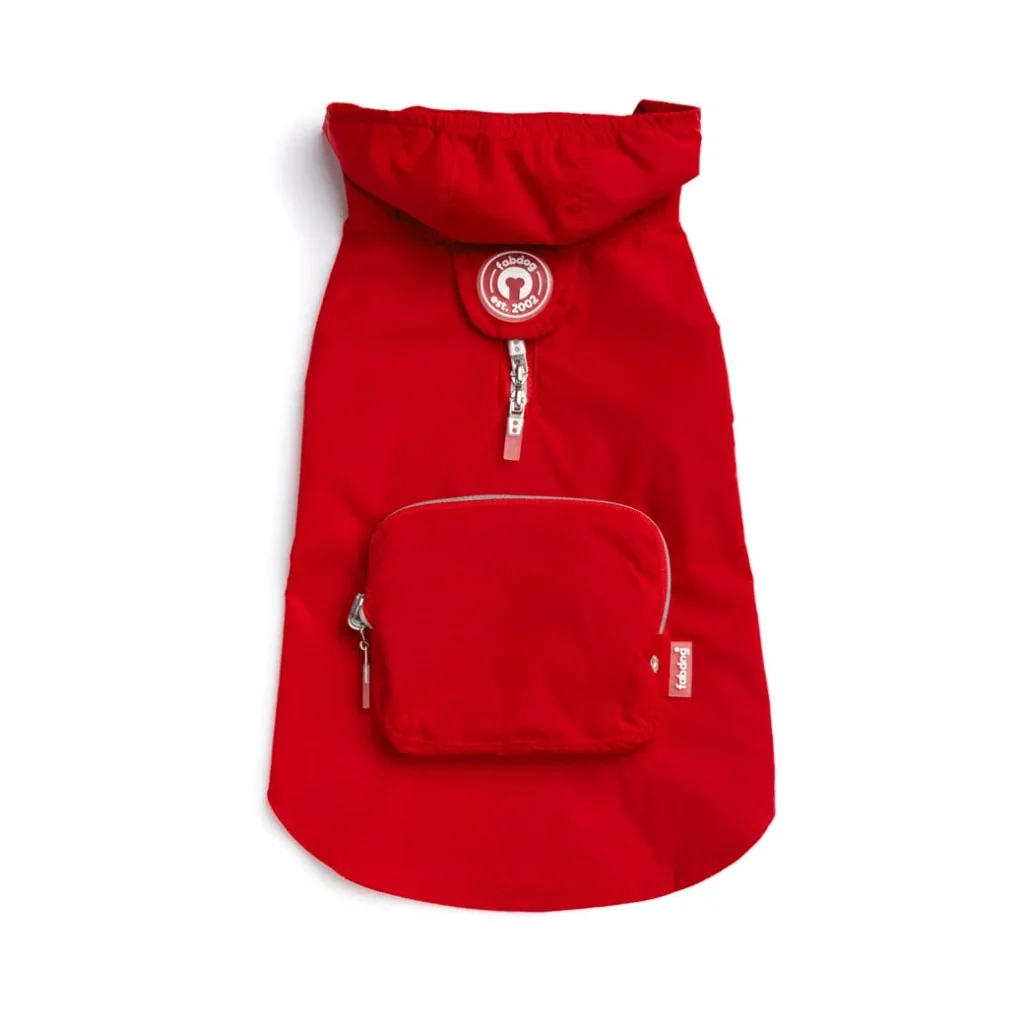
A wet dog gets cold far faster than a dry one, so in mild, rainy winters a waterproof shell matters more than thick insulation. This bright red raincoat keeps the back and sides dry and makes your dog easier to spot on dark evening walks. On colder days, layer a sweater underneath for warmth.
Pros
- Keeps rain and sleet off the back
- Bright colour stands out in low light
- Light enough to layer over a sweater
Cons
- Not insulated, so it needs a layer underneath below freezing
- Less belly coverage than a full suit
4. 3XL-9XL Winter Warm Pet Sweater: best budget layer for large dogs
$21.99 · Shop the Winter Warm Pet Sweater
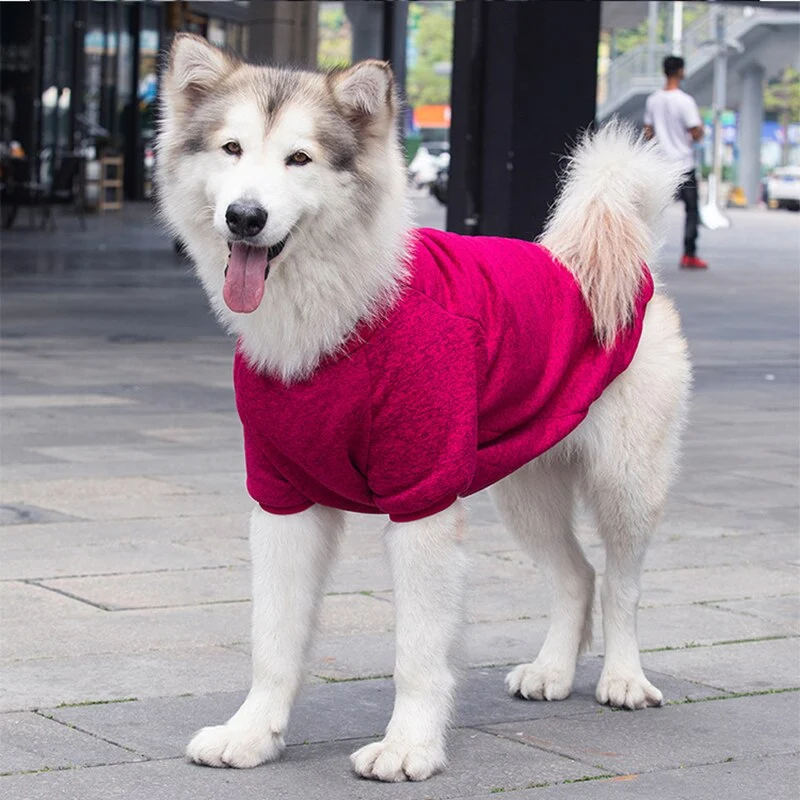
Big, short-coated dogs such as Greyhounds, Boxers, Dobermans and Pit Bull types feel the cold too, but most winter coats stop at XL. This warm layer comes in sizes 3XL to 9XL and costs under $22, so it’s an easy way to keep a large dog warm on dry days. Pair it with the raincoat when it’s wet.
Pros
- Made in sizes 3XL to 9XL for large and giant dogs
- Cheapest pick on the list
- Works alone or under a waterproof shell
Cons
- Knit layers soak through in rain or wet snow
- Less wind protection than a lined coat
Does my dog need a winter coat?
Your dog probably needs a coat if it shivers, lifts its paws, hunches or slows down on cold walks. Coat type, size, body fat, age and health all affect how well a dog copes with cold.
| Usually needs a coat | Usually fine without one |
|---|---|
| Short-haired breeds (Greyhound, Whippet, Boxer, Chihuahua) | Thick double coats (Husky, Malamute, Bernese) |
| Small and toy breeds | Large dogs with dense undercoats |
| Short-legged breeds whose bellies touch snow (Dachshund, Corgi, French Bulldog) | Active working breeds bred for cold |
| Puppies, seniors and lean dogs | Healthy adults on short walks in mild weather |
| Dogs with arthritis, diabetes, heart or kidney disease |
The AVMA notes that short-legged pets get cold faster because their bellies touch snow-covered ground, and that pets with conditions such as diabetes, heart disease, kidney disease or hormonal imbalances can struggle to regulate their temperature. If your dog falls into either group, a coat is worth it. For temperature guidelines by breed size, read our guide on how cold is too cold to walk a dog.
What to look for in a winter dog coat
A good winter coat keeps the chest and belly warm, stays dry in your local weather, and doesn’t fight your dog’s harness.
| Feature | What to choose | Why it matters |
|---|---|---|
| Coverage | Chest and belly panel, not just a back cape | Most heat is lost from the underside |
| Weather | Waterproof shell for rain and slush, lined coat for dry cold | A wet coat loses most of its warmth |
| Neck | High collar or turtleneck | The ASPCA recommends a high collar for short-haired dogs |
| Length | Neck base to tail base | Too short leaves the back exposed, too long trips the legs |
| Fastening | Velcro or buckles under the chest | Easier than pulling a coat over the head |
| Harness opening | Slot for the leash clip | Lets your dog wear its harness underneath |
| Visibility | Bright colour or reflective trim | Winter walks often happen in the dark |
How to measure your dog for a coat
Chest girth is the measurement that matters most. A coat that fits the back but not the chest will ride up or pinch behind the front legs.
- Back length: measure from the base of the neck, where the collar sits, to the base of the tail.
- Chest girth: measure around the widest part of the ribcage, just behind the front legs.
- Neck: measure around the base of the neck, not up near the ears.
- Slide two fingers under the tape on each measurement so the coat isn’t too tight.
- Compare your numbers with the size chart on the product page. Letter sizes vary between brands.
If your dog falls between two sizes, choose the larger size and tighten the straps. Deep-chested breeds usually need to size by chest, then accept a little extra length.
Coat or sweater: which does your dog need?
A sweater adds warmth on dry, cold days, while a coat adds weather protection. Knit sweaters soak through in rain and wet snow, and a wet layer against the skin makes a dog colder. Many owners use both: a sweater for crisp days and indoors in a cold house, and a waterproof coat on top when it’s wet.
Winter walk safety tips
- Protect the paws. Snow, ice and road salt crack paw pads. A pair of dog boots for snow keeps salt off, or wipe paws, legs and belly after every walk.
- Shorten walks. Several short walks are safer than one long one in freezing weather.
- Keep a spare. Swap a wet coat for a dry one on the next walk.
- Check the ID tag. The ASPCA reports that more dogs go missing in winter than in any other season, because snow masks familiar scents.
- Use the right harness. A coat with a harness opening lets you keep pressure off the neck. Our harness guide for French Bulldogs explains what to look for.
- Know the warning signs. Shivering, whining, weakness, slowing down or looking for somewhere to burrow are signs of hypothermia. Bring your dog inside and call your vet if they don’t improve.
FAQs
1. What are the best dog coats for winter?
The best dog coats for winter cover the chest and belly, are insulated for dry cold or waterproof for wet weather, and fit your dog’s chest girth. For dry, freezing days a lined coat such as the Fab Ski is warmest. For slush, a full-body suit keeps the legs and belly dry.
2. At what temperature does a dog need a coat?
Small, short-haired, senior and lean dogs often benefit from a coat once temperatures drop toward freezing, around 32°F (0°C). Thick-coated breeds usually cope well below that. Watch your dog: shivering or lifting paws means it’s too cold.
3. Do dogs really need winter coats?
Some do and some don’t. Short-haired, small, short-legged, young, old and unwell dogs lose heat quickly and benefit from a coat. Huskies, Malamutes and other double-coated breeds usually don’t need one.
4. How should a winter dog coat fit?
It should be snug across the chest and back, with room for two fingers under the straps, and end at the base of the tail. Your dog should be able to walk, sit and lie down without the coat pulling or rubbing behind the front legs.
5. Is a waterproof coat or an insulated coat better?
It depends on your weather. Choose insulated for dry cold and waterproof for rain, sleet and slush. In cold, wet climates, a waterproof shell over a sweater gives you both.
6. Can a dog wear a coat all day?
It’s best to take the coat off indoors. Wearing it all day can cause rubbing and overheating, and a damp coat left on keeps moisture against the skin.
7. Do large dogs need coats?
Large dogs with short coats, such as Greyhounds, Boxers and Dobermans, can feel the cold as much as small dogs. Look for brands that make sizes up to 9XL, like the Winter Warm Pet Sweater above.
8. Can my dog wear a coat over a harness?
Yes, if the coat has a harness opening or is loose enough over the straps. Clip the leash to the harness through the opening, never to a collar under the coat.
Before you check out
Take 15% off with code PACK15 at 50+ independent brands on the DogPack Marketplace. Some stores have codes worth up to 35%.
See every promo code